CBT vs. DBT: Which Therapy Really Works for Addiction Recovery?
- Find Luxury Rehab

- Apr 9
- 4 min read

Introduction
Addiction recovery is more than just stopping substance use. It is about transforming how you think, feel and respond to everyday life. Many individuals searching for help often feel confused about which therapy will truly work for them.
When exploring luxury rehab programs, one common question comes up: CBT vs. DBT, which therapy is better for long-term recovery? Both approaches are widely used in top rehab centers across the United States because they focus on real behavioral change and sustainable results.
This guide will help you clearly understand the difference and choose the right path for your recovery journey.
What Is CBT (Cognitive Behavioral Therapy)?
Cognitive Behavioral Therapy focuses on identifying and changing negative thought patterns that lead to addiction. It helps individuals replace unhealthy habits with practical and positive actions.

Many individuals seeking alcohol addiction treatment benefit from CBT because it provides clear strategies to manage triggers and reduce cravings in real-life situations.
Key Benefits of CBT
• Identifies harmful thoughts and behaviors
• Teaches practical coping strategies
• Focuses on present challenges and solutions
• Helps prevent relapse
Example
A business professional dealing with work pressure may rely on alcohol to cope. Through CBT they learn to recognize these triggers and replace them with healthier routines such as exercise planning or structured time management.
What Is DBT (Dialectical Behavior Therapy)?
Dialectical Behavior Therapy is designed to help individuals manage intense emotions and improve emotional balance. It is especially useful for people who struggle with stress, anxiety, or impulsive behavior.
Many people enrolled in mental health treatment programs receive DBT as part of their recovery because it helps them stay emotionally stable and make better decisions.
Key Benefits of DBT
• Improves emotional regulation
• Builds mindfulness and self-awareness
• Strengthens relationships
• Reduces impulsive actions
Example
An individual experiencing emotional highs and lows may turn to substance use. DBT helps them manage those emotions and respond in a healthier way without relying on drugs or alcohol.
CBT vs. DBT: Key Differences
Understanding CBT vs. DBT helps you make a more informed and confident decision when choosing the right therapy. Both approaches are effective, but they focus on different areas of recovery.
When considering treatment through luxury rehab programs, knowing these differences can help you choose a personalized and effective approach.
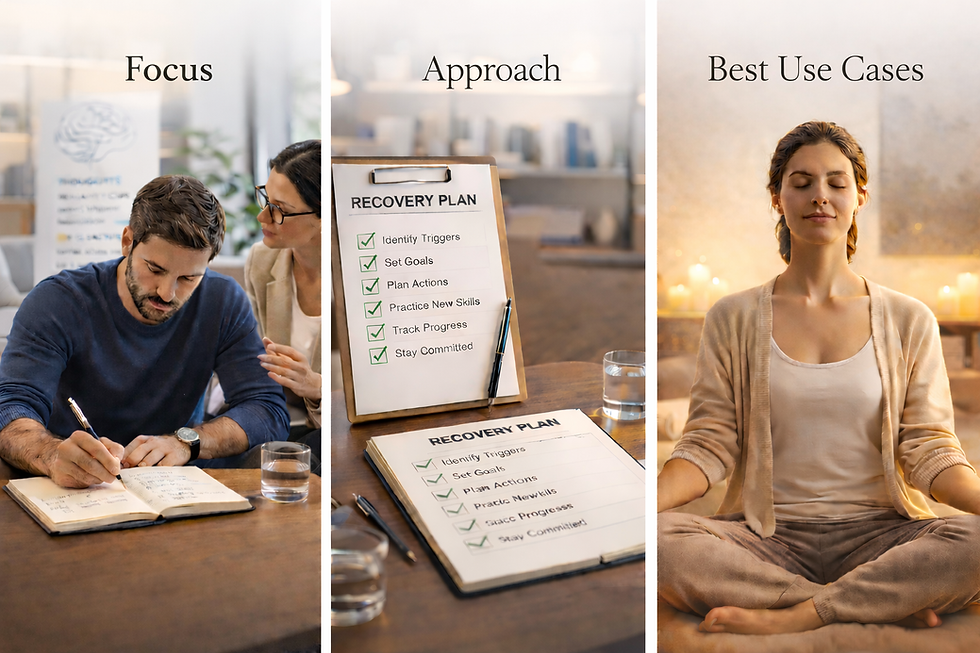
Focus
CBT focuses on identifying and changing negative thoughts and behaviors that lead to substance use. It helps build practical habits that support long-term recovery.
DBT focuses on managing emotions and accepting difficult feelings. It teaches individuals how to stay balanced even in stressful situations.
Approach
CBT follows a structured and goal-driven method where progress is measurable and action-focused. This makes it ideal for individuals who want clear direction.
DBT takes a more flexible and supportive approach. It combines emotional acceptance with behavioral change and is commonly used in mental health treatment programs.
Best Use Cases
CBT is highly effective for habit-based addiction, negative thinking and relapse prevention. It is often recommended in structured drug addiction treatment plans.
DBT is ideal for emotional instability, stress-driven addiction and individuals struggling with relationships. It works well for those who need emotional control and stability.
Which Therapy Works Better for Addiction Recovery
Both therapies are powerful and widely used, but the best choice depends on your personal challenges and recovery needs.
Many leading centers offering personalized addiction treatment combine CBT and DBT to deliver stronger and longer-lasting results.
CBT Is Best If You
• Want structured guidance and clear progress
• Need help with negative thinking patterns
• Prefer practical tools to manage cravings
• Are focused on building disciplined habits
DBT Is Best If You
• Experience intense emotional reactions
• Struggle with relationships or impulsive behavior
• Need help managing stress, anxiety, or mood swings
• Want to improve emotional balance and awareness
Step-by-Step Guide to Choosing the Right Therapy
Choosing between CBT vs. DBT can feel overwhelming, but this simple process can help you decide.
Step 1: Identify Your Core Trigger
Understand whether your addiction is driven by negative thinking patterns or emotional stress.
Step 2: Explore Treatment Options
Look for programs that include both therapies as part of their comprehensive rehab services.
Step 3: Get Expert Guidance
Consult professionals from a trusted luxury rehab center in the USA to get a personalized treatment plan.
Step 4: Choose a Balanced Approach
Many successful recovery journeys include both CBT and DBT for a complete transformation.
Step 5: Focus on Long-Term Results
Select a program that supports on going care, relapse prevention and lifestyle improvement.
Why Luxury Rehab Centers Use Both CBT and DBT
Top-tier facilities offering holistic addiction recovery programs focus on treating both the mind and emotions. This is why they combine CBT and DBT for better outcomes.
This integrated approach helps individuals build strong thinking patterns while also improving emotional stability, which significantly reduces the risk of relapse.
Example
An entrepreneur dealing with stress and substance use may benefit from CBT for structured thinking and DBT for emotional control. This combination creates a strong foundation for long-term recovery.
Practical Tips to Maximize Results
To get the most out of therapy, whether CBT or DBT, follow these simple steps.
• Stay consistent with your sessions
• Practice techniques in daily life
• Be honest about your challenges.
• Build a strong support system
• Focus on long-term growth, not quick fixes
Conclusion
When comparing CBT vs. DBT, both therapies offer powerful tools for addiction recovery. The right choice depends on your personal needs, goals and emotional state.
CBT helps you change how you think and act. DBT helps you manage how you feel. The most effective recovery journeys often combine both approaches for lasting transformation.
Comments